
John Fogerty is a rock legend and the voice of Creedence Clearwater Revival. As of 2026, John Fogerty’s net worth is between $100 million and $110 million, according to multiple trusted sources, including Market Realist and Wikipedia. Most of his wealth comes from music royalties, live touring, and smart real estate deals. In this article, you’ll see exactly how he built his fortune, why some older sources show lower numbers, and what keeps his earnings growing even in his 80s.
John Fogerty’s Net Worth: Current 2026 Estimate
In 2026, John Fogerty’s net worth is widely estimated at $100–$110 million. Market Realist and other royalty-analysis platforms place the figure at $110 million, while some year-end summaries from 2025 showed $105 million. The older $70 million number that still appears on some sites is outdated and no longer accurate.
Here is how his net worth has changed in recent years:
| Year | Net Worth Estimate | Source |
|---|---|---|
| 2024 | $90–$100 million | Multiple financial outlets |
| 2025 | $105 million | Reality Tea |
| 2026 | $100–$110 million | Market Realist, Blessaroo |
The jump from $70 million to over $100 million is not a mystery. It comes from continuous touring income, annual music royalties, large real estate profits, and a historic $120 million publishing rights buyback in 2023. Simply put, Fogerty’s income has stayed strong long after his first hits.
How John Fogerty Earned His $110 Million
John Fogerty did not build his wealth from one source. His money comes from four main areas:
- Music royalties: $6–8 million every year
- Live touring: $100,000 or more per show
- Record sales: Platinum albums across six decades
- Real estate: Over $30 million in property value and profits
Together, these income streams have made him one of the richest rock musicians of the 1960s.
Music Royalties: $6–8 Million Per Year
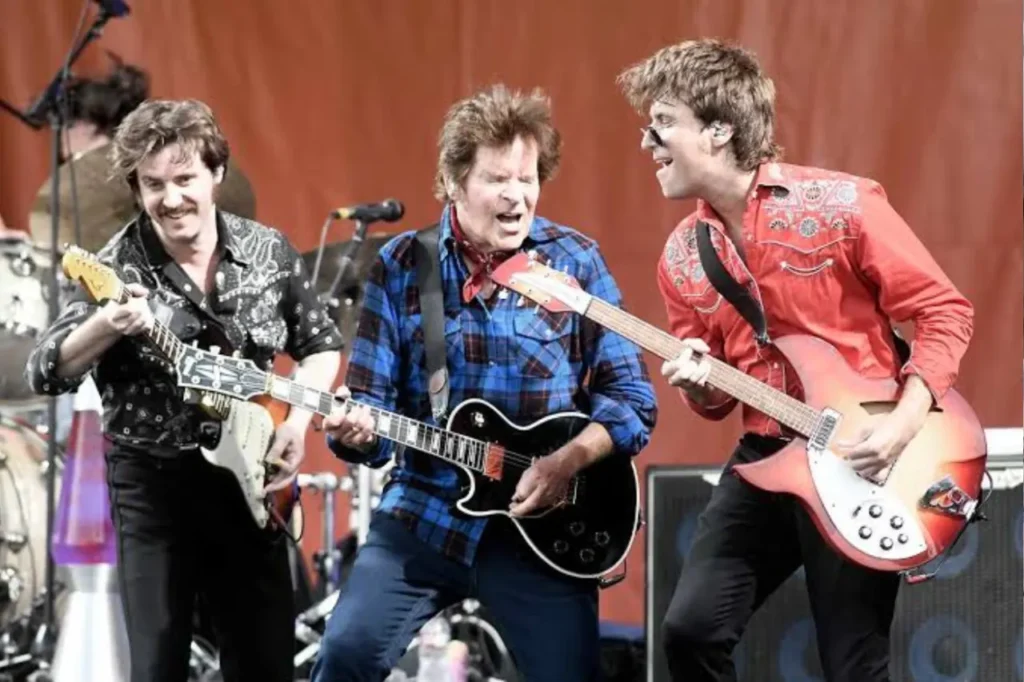
Fogerty’s songs get played on radio, streaming services, TV shows, and movies around the world. Every play generates a royalty payment. Market Realist and royalty-analysis firms report that he now earns $6–8 million annually from his CCR catalog and solo work alone.
Some of the songs that bring in the most royalties include:
- “Fortunate Son”
- “Proud Mary”
- “Have You Ever Seen the Rain”
- “Bad Moon Rising”
- “Who’ll Stop the Rain”
In 2023, Fogerty made a massive move to protect this income. He bought back his publishing rights from Fantasy Records for $120 million. That deal ended a decades-long legal fight and now gives him full control over his music earnings.
Touring Revenue: $100K Per Show
Even in his 80s, Fogerty still tours regularly. He earns an estimated $100,000 or more per concert, and he usually performs 50 to 60 shows in a typical touring year. That adds up to $6–7.2 million in annual touring income.
In 2025, he completed a 13-city “Legacy Tour” with fellow Grammy winner Steve Winwood. As of early 2026, he has five confirmed upcoming concerts across three countries, with tickets available on Ticketmaster. Touring remains one of his biggest and most reliable sources of income.
Record Sales Lifetime Earnings
Fogerty has released more than 20 albums with CCR and as a solo artist. Many of those albums have been certified gold or platinum by the RIAA. Here are a few standout examples:
- Centerfield (1984): 2× Platinum, roughly $2 million in earnings
- Chronicle Vol. 1 (1975): 8× Platinum, roughly $8.4 million
- Blue Moon Swamp (1996): Platinum, roughly $570,000
These numbers only cover U.S. sales. When you add international sales and streaming revenue, the lifetime value of his catalog is enormous.
John Fogerty’s Real Estate Portfolio: $30 Million+
Fogerty has made several high-value property deals over the past two decades. His real estate portfolio is worth well over $30 million, and some individual sales have netted him multimillion-dollar profits.
Major Property Transactions Table
| Property | Purchase Price | Year | Sale/List Price | Year | Profit |
|---|---|---|---|---|---|
| Beverly Hills mansion | $2.9M | 2002 | $18.6M | 2014 | $15.7M |
| Hidden Valley | $8.95M | 2013 | $20M (listed) | 2023 | $11.05M+ |
| Beverly Hills | $23.5M | 2013 | — | — | — |
| Encino | — | — | $9M (listed) | 2021 | — |
| Hidden Hills | $17M | 2023 | — | — | — |
His most famous deal remains the Beverly Hills mansion. He bought it for $2.9 million in 2002 and sold it for $18.6 million in 2014, walking away with a profit of $15.7 million. In 2023, he bought a Hidden Hills estate from actor Sylvester Stallone for $17 million, adding another luxury asset to his collection.
John Fogerty’s Career Timeline: 6 Decades of Music
Few musicians stay relevant for 60 years. John Fogerty’s career has spanned from the mid-1960s to today.
- 1945: Born May 28 in Berkeley, California
- 1965: Formed his first band with brother Tom Fogerty
- 1968: Creedence Clearwater Revival (CCR) officially formed; “Susie Q” became a hit
- 1973: Released his first solo project as the Blue Ridge Rangers
- 1985: Made a massive comeback with the album Centerfield
- 1993: CCR was inducted into the Rock and Roll Hall of Fame
- 1997: Released Blue Moon Swamp, which won a Grammy in 1998
- 2023: Bought back his publishing rights for $120 million
- 2025: Turned 80 and released the album Legacy: The Creedence Clearwater Revival Years
CCR’s Biggest Hits and Album Sales
CCR was only together for a few years, but the band’s impact is permanent. Their biggest hits include:
- “Fortunate Son” — a defining song of the Vietnam War era
- “Proud Mary” — later covered by Ike and Tina Turner
- “Who’ll Stop the Rain” — widely used in films and documentaries
- “Have You Ever Seen the Rain” — remains a global streaming favorite
On the sales side, Chronicle Vol. 1 is certified 8× Platinum, and Cosmo’s Factory reached 4× Platinum. These albums still generate millions in royalties every year.
Awards, Recognition & Social Media
Fogerty’s success is not just financial. He has also earned major industry honors.
- Grammy Awards: 7 nominations and 1 win for Best Rock Album (Blue Moon Swamp, 1998)
- Rock and Roll Hall of Fame: Inducted with CCR in 1993
- Hollywood Walk of Fame: Honored with a star
- Ranking: Named #40 on the list of Top 100 Greatest Singers
His social media presence is also strong for an artist of his era:
- Facebook: 1.4 million followers
- Instagram: 280,000 followers
- YouTube: 527,000 subscribers
- X (Twitter): 175,900 followers
These platforms help him stay connected with fans and promote tours and new music.
Frequently Asked Questions About John Fogerty’s Net Worth
What is John Fogerty’s net worth in 2026?
John Fogerty’s net worth is estimated at $100–$110 million in 2026. Most trusted sources, including Market Realist and Wikipedia, list the figure at $110 million.
How much does John Fogerty earn from royalties annually?
He earns $6–8 million per year from CCR and solo catalog royalties, according to royalty-analysis reports.
Is John Fogerty still touring in 2025-2026?
Yes. He completed a 13-city “Legacy Tour” with Steve Winwood in 2025 and has five upcoming concerts in three countries in 2026.
Did John Fogerty buy back his publishing rights?
Yes. In 2023, he bought back his publishing rights from Fantasy Records for $120 million. This gave him full control of his music catalog.
Why do net worth sources show different figures?
Some websites, like TheRichest, still show an outdated $70 million estimate. Current and more reliable sources place his net worth at $110 million, thanks to updated touring income, real estate profits, and the 2023 rights buyback.
John Fogerty vs. Other CCR Members: Net Worth Comparison
Fogerty’s wealth stands out even among his former bandmates. Here is how the numbers compare:
- John Fogerty: $100–$110 million
- Doug Clifford (CCR drummer): $40 million
- Combined living members: Approximately $180–$190 million
John Fogerty’s solo success, songwriting royalties, and real estate decisions gave him a much larger share of the financial pie.
Conclusion: John Fogerty’s Financial Legacy
John Fogerty’s net worth in 2026 sits comfortably between $100 million and $110 million. He earned this wealth through six decades of hit songwriting, steady royalty checks, nonstop touring, and sharp real estate moves. The $120 million publishing rights buyback in 2023 secured his financial future and proved his business savvy.
Even at 81 years old, Fogerty is still recording, releasing albums, and performing live. For a singer who once fought for the rights to his own songs, his financial story is a true rock-and-roll victory.
If you’re curious about how other public figures manage their money, check out our breakdown of Robin Williams net worth for a look at a different kind of entertainment fortune, or see how young athletes are building wealth early with Haiden Deegan net worth.