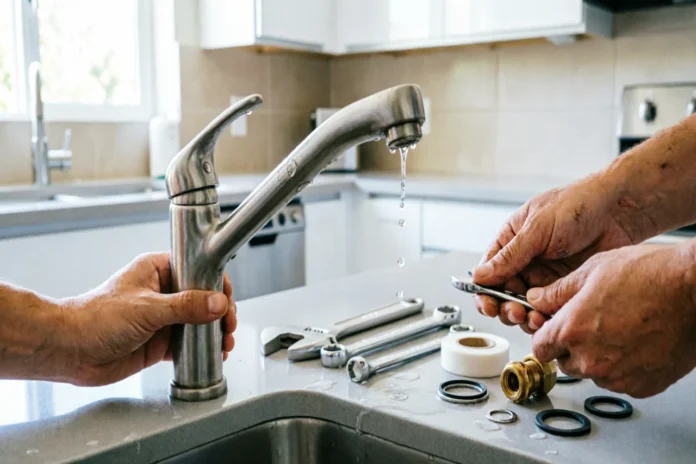
A leaking faucet is one of those small household problems that many homeowners ignore until it starts affecting their water bill or becomes too annoying to tolerate. That constant drip may not seem like a big deal at first, but over time it can waste a significant amount of water and even lead to wear and tear inside your plumbing fixtures. The good news is that most faucet leaks are caused by simple issues like worn-out washers or loose components, and you don’t need professional plumbing skills to fix them. With a few basic tools and a clear step-by-step approach, you can handle this repair yourself, save money, and keep your home in good working condition.
Why a Leaking Faucet Shouldn’t Be Ignored
That slow drip from your faucet might seem harmless, but it can waste hundreds of gallons of water every year—and quietly increase your utility bill. Beyond the cost, constant moisture can lead to mineral buildup, corrosion, and even damage to your sink or countertop.
The good news? Most leaking faucets are simple to fix with basic tools and a little patience. You don’t need to be a professional plumber—just follow the right steps.
Common Causes of a Leaking Faucet
Understanding the cause helps you fix the problem faster and avoid repeat repairs.
Worn-Out Washers
This is the most common issue, especially in older compression faucets. The washer presses against a valve seat to stop water flow. Over time, friction wears it down, causing leaks.
Damaged O-Rings
O-rings are small rubber rings that seal the faucet handle. When they loosen or crack, water can leak around the handle area.
Corroded Valve Seat
The valve seat connects the faucet to the spout. Mineral deposits from hard water can corrode this part, leading to leaks near the spout.
Loose or Worn Parts
Daily use loosens screws, nuts, and internal components. Even a slightly loose part can create a steady drip.
Identify Your Faucet Type Before Repair
Not all faucets are built the same. Identifying your type will guide your repair.
Compression Faucets
These have separate hot and cold handles. They rely on washers and are the easiest to repair.
Ball Faucets
Common in kitchens, these use a rotating ball to control water. They have more parts but usually come with repair kits.
Cartridge Faucets
These use a movable cartridge inside. They’re reliable, but leaks often mean replacing the cartridge.
Ceramic Disc Faucets
Modern and durable, these use ceramic plates. Leaks are rare but usually fixed by replacing seals.
Tools and Materials You’ll Need
Before starting, gather everything to avoid mid-repair trips:
- Adjustable wrench
- Screwdrivers (flathead and Phillips)
- Replacement washers or O-rings
- Faucet repair kit (for ball or cartridge types)
- Plumber’s grease
- Needle-nose pliers
- Clean cloth or rag
- Bowl or container for small parts
Optional but helpful:
- White vinegar (for cleaning mineral buildup)
Step-by-Step: How to Fix a Leaking Faucet
Step 1 – Turn Off Water Supply
Locate the shutoff valves under the sink and turn them clockwise. If you don’t see them, you may need to shut off the main water supply.
Turn on the faucet to release any remaining water pressure.
Step 2 – Plug the Drain
Use a sink plug or rag to block the drain. Small screws and parts can easily fall in and get lost.
Step 3 – Disassemble the Faucet
Remove the handle using a screwdriver. Some handles have decorative caps hiding the screw.
Once the handle is off:
- Unscrew the packing nut or retaining clip
- Carefully remove internal components
Take note of the order of parts—or snap a quick photo for reference.
Step 4 – Inspect and Replace Faulty Parts
Now examine the components:
- Washer: If it looks flattened or cracked, replace it
- O-ring: Replace if worn or brittle
- Cartridge: Swap it out if damaged
- Valve seat: Clean with vinegar or replace if corroded
Apply a small amount of plumber’s grease to new parts before installing. This helps with smooth operation and extends lifespan.
Step 5 – Reassemble and Test
Put everything back together in reverse order. Tighten parts snugly—but don’t over-tighten, as this can damage components.
Turn the water supply back on slowly and test the faucet. Check for leaks and smooth operation.
If it still drips, double-check that parts are properly seated and tightened.
Estimated Cost of DIY Faucet Repair
One of the biggest advantages of fixing a faucet yourself is the cost savings.
- Washers/O-rings: $1–$5
- Faucet repair kit: $10–$25
- Cartridge replacement: $15–$40
- Basic tools (if needed): $20–$50
Compared to hiring a plumber—which can cost $75–$200 for a simple fix—DIY repair is significantly cheaper.
Safety Tips and Best Practices
- Always turn off the water before starting
- Use the correct size tools to avoid stripping screws
- Avoid excessive force when tightening parts
- Keep track of small components
- Clean parts thoroughly before reinstalling
If your home has older plumbing, be extra careful. Pipes and fittings may be more fragile due to age or corrosion.
Real-World Example: Quick Fix That Saved Money
A homeowner noticed a steady drip in their bathroom sink. Instead of calling a plumber, they opened the faucet and found a worn washer.
The repair took 20 minutes and cost less than $3. Had they hired a plumber, the service call alone would have cost over $100.
Small fixes like this are where DIY really pays off.
When You Should Still Call a Plumber
While most faucet leaks are simple, some situations need professional help:
- Severe corrosion inside the faucet body
- Water leaking under the sink or inside the cabinets
- Broken pipes or fittings
- Persistent leaks after replacing parts
If the issue goes beyond the faucet itself, it’s better to bring in a licensed plumber to prevent bigger damage.
Conclusion
Fixing a leaking faucet is one of the easiest and most rewarding home repairs you can tackle. With a few basic tools and the right approach, you can stop the drip, save water, and avoid unnecessary expenses.
Start by identifying your faucet type, replacing worn components, and reassembling carefully. Most repairs take less than an hour and cost only a few dollars.
Take a few minutes today to inspect that dripping faucet—you might solve the problem faster than you think.