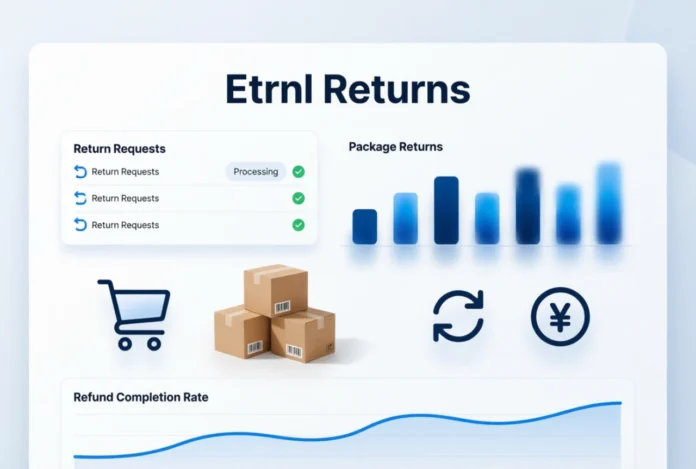
Returns are one of the most friction-heavy parts of running an e-commerce store — for merchants and customers alike. This guide breaks down Etrnl Returns: what it is, how it works, who it’s designed for, and how it stacks up against the crowded field of return management software. Whether you’re evaluating it seriously or just exploring your options, this is a practical starting point.
Every online store reaches the same moment eventually. Orders are going out, reviews are coming in, and then — the returns start piling up. A customer needs the wrong size swapped. Another wants a refund on something they ordered three weeks ago. A third has sent something back with no note inside the package.
If you’re handling this manually, you already know the cost: inbox clutter, delayed resolutions, unhappy customers, and staff time that could be used elsewhere.
Returns software exists to fix exactly this. And Etrnl Returns is one of the newer platforms, positioning itself as a cleaner, more merchant-friendly way to manage post-purchase logistics. This guide covers what it offers, who it suits best, and what to consider before committing.
What Is Etrnl Returns?
Etrnl Returns is a returns management platform built for ecommerce merchants, with a particular focus on Shopify-based stores. The core idea is straightforward: give customers a self-serve portal to initiate returns, exchanges, and refunds — while giving merchants the tools to automate approvals, manage logistics, and track return data in one place.
The product sits in a growing category of post-purchase tools that treat returns not just as a cost center, but as an opportunity. A smooth return experience is one of the clearest signals of brand trust. Research consistently shows that a positive return experience makes customers more likely to repurchase, which means the way a store handles returns has a direct impact on customer lifetime value.
Etrnl Returns is built around that premise.
How Etrnl Returns Works
The workflow follows a familiar structure, executed with a focus on reducing friction at every stage.
The Customer Side
When a customer wants to return or exchange a product, they access a branded returns portal — typically linked from an order confirmation email or the store’s website footer. From there, they enter their order details, select the items they want to return, choose a reason, and pick an outcome: refund, exchange, or store credit.
No back-and-forth emails. No waiting for a human to respond before they can even start the process. The portal handles the intake, and the customer knows immediately what happens next.
The Merchant Side
On the backend, merchants see incoming return requests organized in a dashboard. Depending on how the platform is configured, returns can be auto-approved based on rules the merchant sets (within a certain return window, under a certain order value, for specific SKUs), or they can be held for manual review.
From there, label generation, customer notification, and inventory updates can all be triggered — ideally without someone having to touch each case individually.
The goal is to reduce the operational overhead of returns while keeping the customer experience consistent and professional.
Key Features of Etrnl Returns
Here’s a breakdown of the core functionality merchants typically look for in returns software — and how Etrnl Returns addresses each.
Branded Self-Serve Return Portal
Customers interact with a customizable portal that reflects the store’s branding. This matters more than it sounds. A generic, clearly third-party returns page signals to the customer that returns are an afterthought. A branded portal reinforces professionalism and consistency through the entire post-purchase journey.
Automated Return Rules
Merchants can configure logic that determines which return requests are auto-approved. Common rules include: return windows (e.g., returns accepted within 30 days of delivery), item conditions, product categories, and order values. This is where returns software pays for itself — eliminating the manual approval step for the large majority of straightforward cases.
Exchange Management
One of the most important capabilities in modern returns software is the ability to push customers toward exchanges rather than full refunds. Etrnl Returns is designed with exchange workflows built in, allowing customers to swap products quickly — keeping revenue in the store instead of sending it back to their bank account.
Prepaid Return Labels
Merchants can integrate with shipping carriers to generate prepaid return labels automatically. Customers receive the label as part of the portal flow, which removes one of the most common abandonment points in the return process.
Refund and Store Credit Options
Beyond straight refunds, merchants can configure the platform to offer store credit as an incentive — often sweetened with a small bonus amount. This turns a return into a future sale.
Returns Analytics
Tracking return rates, return reasons, and affected SKUs is genuinely useful data. If a particular product is being returned repeatedly for the same reason, that’s a product description problem, a sizing issue, or a quality signal — all of which are worth knowing. Etrnl Returns surfaces this data in a dashboard.
Shopify Integration
The platform connects directly with Shopify, syncing order data, inventory levels, and customer records. This means return requests map automatically to the correct orders without any manual data entry.
Etrnl Returns for Shopify Merchants
Shopify is the dominant platform for independent ecommerce brands, and returns management for Shopify stores has evolved significantly. The Shopify App Store is full of options at every price point — from lightweight free tools to enterprise-grade platforms charging hundreds of dollars per month.
Etrnl Returns targets the middle of that market: stores that have outgrown manual email-based returns handling, but don’t yet need (or can’t yet justify) the complexity and cost of enterprise-tier platforms.
For a Shopify merchant running anywhere from a few hundred to several thousand orders per month, the core value is clear. Return requests sync with Shopify orders automatically, refunds can be triggered back through the Shopify payment system, and exchange orders are created natively. The result is a closed loop that doesn’t require jumping between multiple tools to complete a single return.
Benefits of Using Etrnl Returns
Let’s move past the feature list and talk about what this actually changes for a store.
Time saved per return. The operational overhead of manually handling returns — responding to emails, checking order details, generating labels, issuing refunds — adds up fast. A returns platform like Etrnl automates the routine work, which means your team’s time goes toward things that actually require human judgment.
Better customer experience. The self-serve portal is the customer-facing version of this efficiency. Customers don’t want to wait. A portal that handles their return request in five minutes, at 11 pm, without needing anyone at the store to be awake — that’s a material improvement in experience.
Fewer refunds, more exchanges. This is the number most DTC brands care about. When the return portal actively offers exchange options, a meaningful percentage of customers choose to swap rather than refund. That’s retained revenue that would otherwise leave.
Return data you can actually use. Over time, return reason data becomes one of the more valuable sources of product feedback a store has. If a specific colorway is being returned at twice the rate of others, or if a sizing chart is consistently misleading customers, returns data tells you that before reviews do.
Etrnl Returns Pricing Overview
Specific pricing for Etrnl Returns should be confirmed directly on their website, as plans are subject to change and tend to vary based on return volume and feature tier. That said, returns management software of this type typically structures pricing around monthly return volume — meaning smaller stores pay less and scale up as their operation grows.
When evaluating pricing, the relevant comparison isn’t the monthly subscription cost in isolation. It’s: what does each manually-handled return cost in staff time, and how many returns per month does the platform need to automate before it pays for itself? For most stores handling more than 30–50 returns per month, the math tends to favor automation quickly.
Most platforms in this category offer a free trial period — worth taking advantage of before committing to a plan.
Etrnl Returns vs. Competitors
The Shopify returns management space is competitive. Here’s a brief look at how Etrnl Returns compares to the better-known alternatives:
Loop Returns is one of the most well-known brands in the category, popular with DTC brands doing meaningful volume. It’s exchange-first and has deep integrations, but its pricing sits at the higher end — often better suited to established brands than growing stores.
AfterShip Returns is widely used, comes from a reliable post-purchase platform, and offers a lower entry price point. It’s strong on carrier integrations and analytics. Some merchants find the interface requires more configuration to get to a clean customer experience.
ReturnGO is exchange-focused, highly rated, and priced accessibly for mid-size stores. It’s a strong direct competitor to Etrnl Returns in the same market segment.
Rich Returns is a solid option for stores that prioritize brand customization and a Shopify-native feel.
ReturnZap tends to be favored by merchants who want robust logic and rules without enterprise-level cost.
Where Etrnl Returns carves out positioning is in combining branded experience, exchange-first workflows, and accessible pricing — without the complexity overhead of the larger platforms. For stores that want a polished, effective solution without a long setup process, that’s a real selling point.
Who Should Use Etrnl Returns?
Etrnl Returns makes the most sense for:
Growing Shopify brands handling between 50 and 1,000 returns per month, where manual handling is clearly breaking down, but the cost of enterprise software isn’t yet justified.
DTC apparel and accessories brands, where sizing returns are common, and exchanges are a natural alternative to refunds.
Merchants who care about post-purchase experience and recognize that the return interaction is part of how a brand is perceived, not just a logistics problem to solve cheaply.
Store owners with small teams, where automation has an outsized impact because there simply isn’t enough bandwidth to handle volume manually.
It’s less likely to be the right fit for enterprise operations that need deep ERP integrations, advanced 3PL workflows, or multi-warehouse logic.
Pros and Cons
What works well:
- Clean branded portal that doesn’t feel like a generic third-party tool
- Exchange-first workflows are built into the customer flow
- Shopify-native integration without workarounds
- Return rules engine that reduces manual approvals
- Accessible for smaller stores without complex onboarding
Things to be aware of:
- Newer to the market than Loop or AfterShip, which means a smaller track record at scale
- Feature depth in some areas (carrier integrations, language support) may vary by plan
- Volume-based pricing can become a consideration as stores scale significantly
Is Etrnl Returns Worth It?
The honest answer is: it depends on where your store is right now.
If returns are still manageable by hand — say, under 20 per month — you probably don’t need a dedicated platform yet. A well-written return policy, a simple email template, and a consistent process will cover you for now.
If returns are generating real operational friction — if your team is spending hours each week on return emails, if customers are complaining about slow resolutions, if you have no visibility into why returns are happening — then yes, the investment in a platform like Etrnl Returns will likely pay back quickly.
The exchange-first design is particularly compelling for brands where sizing and fit are significant factors. If even a small percentage of your refunds can be converted to exchanges, that alone often justifies the monthly cost.
The best move is to take advantage of a trial period, run it against your real return volume, and see what the numbers look like.
Conclusion
Returns aren’t going away. E-commerce growth means return volume grows with it, and customers’ expectations around how returns are handled keep rising. A slow, friction-heavy return process isn’t just a cost — it’s a brand signal.
Etrnl Returns addresses this with a focused product: a branded self-serve portal, smart automation, exchange-first workflows, and clean Shopify integration. It’s built for the growing store that needs more than a manual process and doesn’t want the overhead of enterprise software.
If return management is a live pain point in your operation, it’s worth exploring. The right tool doesn’t just reduce cost — it turns a reluctant process into something that actually builds customer trust.
Frequently Asked Questions
What does Etrnl Returns do? Etrnl Returns is a returns management platform that gives ecommerce merchants a branded self-serve portal for customers, automated return approval workflows, exchange management, and return analytics — designed to reduce the manual effort of handling returns while improving the customer experience.
Is Etrnl Returns a Shopify app? Yes, Etrnl Returns is built for Shopify integration. It connects with Shopify to sync order data, trigger refunds, and create exchange orders natively within the Shopify ecosystem.
How much does Etrnl Returns cost? Pricing varies by plan and return volume. Visit the Etrnl Returns website directly for current pricing — most plans in this category are tiered by monthly return volume, with options for smaller stores and growing brands alike.
Is Etrnl Returns worth it for small stores? For stores handling fewer than 20 returns per month, manual management may be sufficient. Once return volume creates real operational overhead, returns software typically pays for itself quickly in saved time and recovered revenue from exchanges.
What are the main alternatives to Etrnl Returns? The main competitors include Loop Returns, AfterShip Returns, ReturnGO, Rich Returns, and ReturnZap. Each has different strengths in pricing, feature depth, and brand fit — worth comparing based on your store’s volume and priorities.
Can Etrnl Returns help reduce refunds? Yes — by offering exchange options prominently within the return portal, the platform is designed to convert a portion of refund requests into exchanges, retaining revenue that would otherwise leave the store.