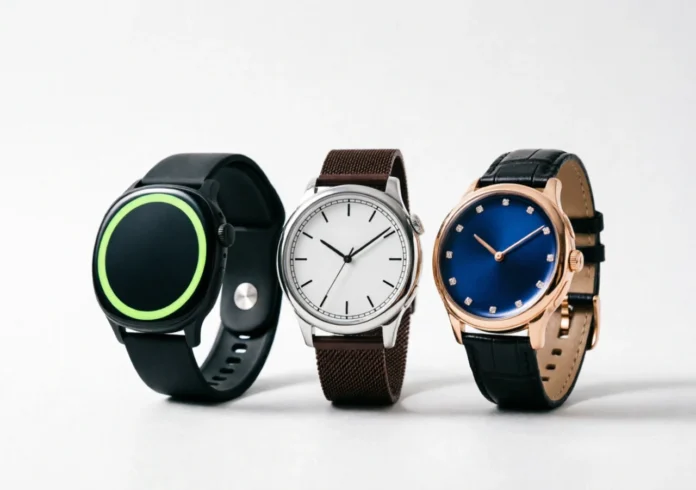
A smartwatch can completely transform how you manage your health, stay connected, and organize your day — but only if you pick the right one.
With dozens of options available in 2026, choosing the best smartwatch feels overwhelming. Prices range from $100 to over $800. Features vary wildly. And one wrong choice means money wasted on a device that never leaves the drawer.
This smartwatch buying guide breaks everything down clearly — real specs, honest comparisons, and practical advice — so you walk away knowing exactly which watch is right for your lifestyle.
What to Look for in a Smartwatch
Before browsing models, you need to understand what actually matters in a smartwatch. Most buyers focus on looks — but the wrong choice on any one of these factors can ruin the experience.
Battery Life: Your First Filter
Battery life is the single biggest deal-breaker. A watch that needs daily charging quickly becomes a chore.
- Under 24 hours: Frustrating for most users (e.g., Apple Watch Series 9 at ~18 hours)
- 2–5 days: Ideal for casual users (e.g., Samsung Galaxy Watch 6)
- 7–18 days: Best for fitness users and travellers (e.g., Garmin Fenix 7)
Compatibility: Match Your Phone Ecosystem
This is non-negotiable. A smartwatch that doesn’t play well with your phone loses most of its value.
- iPhone users → Apple Watch is the clear winner. Third-party watches work but lose features.
- Android users → Samsung Galaxy Watch 6 or Google Pixel Watch offer the tightest integration.
- Cross-platform options → Garmin and Fitbit work with both, but with some feature limitations.
Pro Tip: Always check if your phone’s OS version meets the watch’s minimum requirements before buying.
Performance and Software
A slow smartwatch is a frustrating smartwatch. Look for at least 1GB RAM and a recent processor generation. Smooth app launches and quick notification responses are signs of good performance.
Fitness Tracking vs. Smart Features
Most buyers struggle with this question. The honest answer: You rarely need both at the highest level. Pick what matches your daily habits.
Choose Fitness-First If You:
- Work out regularly and want accurate data
- Care about VO2 max, heart rate variability (HRV), and recovery scores
- Want GPS tracking without carrying your phone
- Sleep track and want a detailed sleep stage analysis
Best picks: Garmin Forerunner 265, Garmin Fenix 7, Polar Vantage V3
Choose Smart-First If You:
- Want quick access to notifications, calls, and apps
- Need contactless payments (Google Pay / Apple Pay)
- Use voice assistants (Siri, Google Assistant, Bixby)
- Want ECG readings and fall detection for health safety
Best picks: Apple Watch Series 9, Samsung Galaxy Watch 6, Google Pixel Watch 3
Hybrid Approach (Best of Both):
If you want health tracking and smart features without going premium, the Fitbit Sense 2 ($299) strikes a solid balance with stress tracking, sleep analysis, and smart notifications.
Best Smartwatches in 2026
Here’s a clear breakdown of the top smartwatch options across different categories:
| Watch | Best For | Price | Battery Life | OS |
|---|---|---|---|---|
| Apple Watch Series 9 | iPhone users | ~$399 | ~18 hours | watchOS |
| Apple Watch Ultra 2 | Adventure & professionals | ~$799 | ~60 hours | watchOS |
| Samsung Galaxy Watch 6 | Android users | ~$299 | ~40 hours | Wear OS |
| Garmin Fenix 7 | Serious fitness athletes | ~$699 | Up to 18 days | Garmin OS |
| Garmin Forerunner 265 | Runners & cyclists | ~$449 | Up to 13 days | Garmin OS |
| Fitbit Sense 2 | Budget health tracking | ~$299 | 6+ days | Fitbit OS |
| Google Pixel Watch 3 | Android / Google users | ~$349 | ~24 hours | Wear OS |
Battery Life Comparison {#battery-life}
Battery performance depends heavily on how you use the watch. Here’s what to expect in real-world usage:
Always-On Display: The Battery Killer
Enabling always-on display (AOD) can cut battery life by 30–40%. If battery matters to you, turn this feature off. Most watches let you tap to wake instead.
Fast Charging: A Lifesaver for Low-Battery Watches
Watches with shorter battery life are increasingly including fast charging to compensate:
- Apple Watch Series 9 → 0–80% in about 45 minutes
- Samsung Galaxy Watch 6 → 0–45% in 30 minutes
If you’re buying a daily-charge watch, fast charging is essential — not optional.
GPS Usage: The Hidden Battery Drain
Active GPS tracking can drain the battery 3–5x faster than normal usage. Garmin handles this best with its power management settings. Always check the “GPS mode battery life” spec, not just the standard quote.
Display and Design Guide {#display-design}
Your smartwatch is on your wrist all day. Comfort and appearance are genuine factors — not just vanity.
AMOLED vs. MIP Displays
- AMOLED: Vibrant colors, deep blacks, excellent indoor visibility. Used by Apple Watch and Samsung Galaxy Watch. Drains more battery.
- MIP (Memory-In-Pixel): Always visible in sunlight, uses minimal power. Used by Garmin watches. Less visually impressive but practical outdoors.
Screen Protection
- Sapphire Crystal: The best scratch resistance available. Found on premium models like the Apple Watch Ultra 2 and the Garmin Fenix 7.
- Gorilla Glass: Standard on mid-range models. More prone to micro-scratches over time.
Size Guide: Finding the Right Fit
| Wrist Size | Recommended Watch Size |
|---|---|
| Small (under 15cm) | 40–42mm |
| Medium (15–17cm) | 44–45mm |
| Large (over 17cm) | 46–47mm |
Weight matters too. If you sleep with your tracking watch, heavier models (like the Apple Watch Ultra 2 at 61g) can be uncomfortable overnight.
Strap and Band Options
Standard strap widths — 20mm and 22mm — mean you’re not locked into expensive brand-specific bands. Always verify before buying, especially for Garmin and Samsung models.
How Much Should You Spend? {#price-guide}
Smartwatch prices span an enormous range. Here’s a realistic breakdown of what you get at each tier:
Budget: $100–$250
Good for basic step counting, sleep tracking, and notifications. Don’t expect accurate GPS or advanced health sensors. Fine for casual, non-fitness users. Best option: Amazfit GTR 4, Fitbit Inspire 3
Mid-Range: $300–$500 (Best Value Zone)
This is where most people should shop. You get accurate health sensors, reliable GPS, solid software, and good build quality. Models like the Samsung Galaxy Watch 6 and Fitbit Sense 2 live here.
Premium: $600–$800+
Worth it for enthusiasts, athletes, or professionals who need rugged durability, advanced metrics, or cellular independence. The Apple Watch Ultra 2 ($799) and Garmin Fenix 7 ($699) are the standard-bearers.
Pro Tip: Avoid paying extra for LTE/cellular connectivity unless you genuinely need calls and data without your phone nearby. It costs more upfront and requires a monthly carrier fee.
Smartwatch Compatibility: iOS vs Android {#compatibility}
Compatibility is where many buyers make expensive mistakes. Here’s a simple guide:
Apple Watch → iPhone Only
Apple Watch is locked to iPhone. It will not work with Android phones at all. If you’re an iPhone user, it’s the best-integrated option by far.
Samsung Galaxy Watch → Best with Samsung Android
Galaxy Watch works with most Android phones but delivers the full experience only with Samsung Galaxy devices. Non-Samsung Android users may miss some features like Samsung Pay and Bixby.
Garmin, Fitbit, Polar → Works with Both (With Limits)
These watches pair with both iOS and Android via companion apps. Ideal if you switch phones or use a non-Samsung Android. Feature parity is good, though some deep integrations may be missing.
Health Sensors Explained {#health-sensors}
Not every health sensor listed in a spec sheet is worth your attention. Here’s what actually matters:
Worth Paying For:
- ECG (Electrocardiogram): Detects irregular heart rhythms. Genuinely useful for those with cardiac concerns. Available on Apple Watch, Samsung Galaxy Watch, Fitbit Sense 2.
- SpO2 (Blood Oxygen): Monitors oxygen saturation. Useful for sleep tracking and altitude awareness.
- Heart Rate Variability (HRV): Key metric for recovery and stress. Garmin and Polar handle this best.
- Skin Temperature Sensor: Tracks subtle changes that indicate illness or menstrual cycle patterns. Available on newer Fitbit and Apple models.
Often Overhyped:
- Body Composition Analysis: Accuracy is questionable on wrist-based sensors. Use a dedicated smart scale instead.
- Blood Glucose Monitoring: Not available on mainstream watches as of 2026 in a medically reliable form. Ignore any budget watch claiming this feature.
Top Buying Tips Before You Purchase {#buying-tips}
Follow these tips to avoid common mistakes:
1. Lock in compatibility first. No amount of features compensates for a watch that barely works with your phone.
2. Prioritize features you’ll use every single day. ECG and altitude tracking are impressive on paper. If you never open the health app, they’re pointless.
3. Match battery life to your charging habits. If you dislike charging devices often, stick with Garmin or Fitbit. If daily charging is fine, Apple or Samsung delivers richer experiences.
4. Check for software update commitments. Apple, Samsung, and Garmin provide multi-year update support. Unknown brands may stop receiving updates within 12 months.
5. Read real user reviews, not just spec sheets. Accuracy, comfort, and real battery life often differ significantly from manufacturer claims.
6. Factor in long-term costs. Some platforms charge subscriptions for full health features (e.g., Fitbit Premium at ~$10/month). Include this in your budget calculation.
7. Try it on before buying. If possible, visit a store to check the weight, size, and comfort on your actual wrist.
Frequently Asked Questions
Which smartwatch is best overall in 2026?
The Apple Watch Series 9 remains the top choice for iPhone users thanks to its ecosystem integration, accurate sensors, and polished software. For Android users, the Samsung Galaxy Watch 6 leads the field with strong performance and reliable health tracking.
How much should I spend on a smartwatch?
Most users get the best value in the $300–$500 range. This tier covers reliable health sensors, GPS, solid build quality, and long software support. Budget options work for casual use, while premium models above $600 are best for athletes or specific professional needs.
Can a smartwatch work without a phone?
Yes — most smartwatches can track fitness, store music, and run apps without a phone nearby. However, for calls, real-time notifications, and internet access, you need either your phone or a cellular (LTE) model with an active data plan.
Which smartwatch has the best battery life?
Garmin watches lead by a wide margin. The Garmin Fenix 7 lasts up to 18 days in standard smartwatch mode. Most mainstream smartwatches (Apple Watch, Samsung Galaxy Watch) last 1–2 days.
Are expensive smartwatches worth buying?
Yes — if you’ll actually use their advanced features. Premium watches offer better build materials, more accurate sensors, longer battery life, and stronger durability. If your needs are basic notifications and step counting, a mid-range watch is smarter value.
What is the best smartwatch for fitness?
The Garmin Forerunner 265 is the best option for serious fitness tracking. It offers VO2 max estimation, training readiness scores, detailed GPS mapping, and up to 13 days of battery life — all essential for athletes and dedicated gym-goers.
Is LTE worth it on a smartwatch?
Only if you regularly exercise, travel, or work without your phone nearby and still need to take calls or receive messages. For most users, standard Bluetooth connectivity is sufficient and saves money on the device and monthly carrier fees.
Final Verdict
The best smartwatch is not the most expensive one — it’s the one that fits your daily life.
- iPhone user who wants it all? → Apple Watch Series 9
- Android user seeking balance? → Samsung Galaxy Watch 6
- Serious fitness athlete? → Garmin Fenix 7 or Forerunner 265
- Budget-conscious health tracker? → Fitbit Sense 2
- Rugged adventurer? → Apple Watch Ultra 2
Focus on compatibility, battery life, and daily-use features. Ignore the noise from specs you’ll never need. A well-chosen smartwatch improves your health awareness, keeps you connected, and genuinely saves time — every single day.