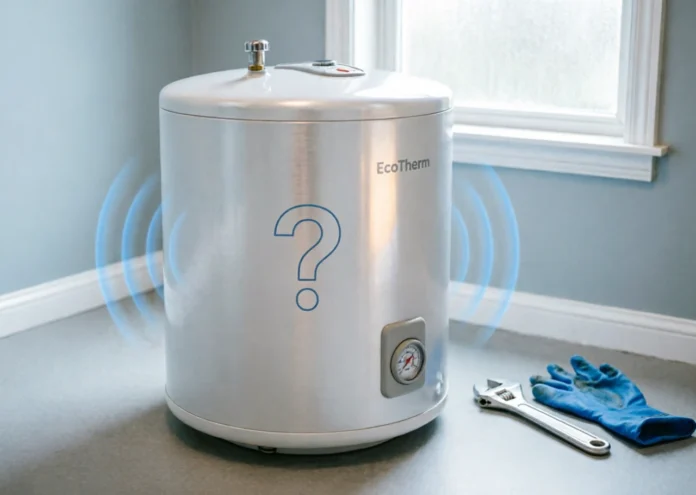
Most homeowners don’t think about their water heater until something goes wrong. And one of the first warning signs? Noise. That popping, rumbling, or hissing sound coming from the utility closet isn’t just annoying — it’s your water heater telling you something needs attention.
Here’s the good news: most water heater noises are fixable, and many of them you can handle yourself with basic tools and a free afternoon. Left alone, though, some of these issues can shorten the life of your unit significantly — and a new water heater runs anywhere from $600 to $2,000 installed, depending on the type and size.
Let’s break down what you’re hearing, why it’s happening, and exactly what to do about it.
The Most Common Water Heater Noises and What They Mean
Popping or Rumbling — Sediment Buildup
This is by far the most common complaint I hear from homeowners, and it’s almost always the same culprit: sediment buildup at the bottom of the tank.
Over time, minerals like calcium and magnesium from your water supply settle at the bottom of your water heater. When the burner heats the water beneath that layer of sediment, it creates steam bubbles that pop through — hence the popping and rumbling sounds.
This is especially common in areas with hard water. If your home gets its water from a well or a municipality with high mineral content, expect this problem sooner rather than later.
The risk: Beyond the noise, sediment reduces heating efficiency, forces the unit to work harder, and can cause overheating that damages the tank lining.
Hissing or Sizzling — Condensation or a Leak
A hissing sound often means water is hitting a hot surface — typically a small leak dripping onto the burner or a hot pipe. On gas water heaters, this can also happen during initial startup when condensation forms on a cold tank.
If the hissing is consistent and accompanied by visible moisture or a higher-than-normal gas bill, treat it as a potential leak situation and investigate immediately.
Knocking or Banging — Water Hammer
If you hear a loud thud or bang when the hot water shuts off, that’s water hammer — a pressure surge caused by water stopping abruptly in the pipes. It’s not always a water heater issue per se, but it’s felt most around the unit and connected pipes.
Water hammer can stress pipe joints and connections over time, leading to leaks or fittings that work themselves loose.
Screeching or Whining — Valve or Pressure Issues
A high-pitched whine or screech usually points to a partially closed valve — either the inlet valve or the temperature and pressure relief (TPR) valve. When water is forced through a narrow opening, it screams.
This can also indicate that your water pressure is too high. Normal residential water pressure should sit between 40 and 80 PSI. Anything above that puts stress on your entire plumbing system.
Ticking or Clicking — Expansion and Contraction
Light ticking sounds are usually harmless. As pipes and the tank heat up and cool down, they expand and contract — creating a rhythmic clicking. If the noise is faint and infrequent, it’s generally nothing to worry about.
However, if the ticking is loud or increases over time, it’s worth checking the pipe straps to make sure everything is properly secured.
How to Diagnose Your Water Heater Noise
Before grabbing your tools, spend five minutes doing a proper assessment:
- Listen closely — Is the noise constant or does it happen only when heating? Constant noise points to structural issues; noise during heating usually means sediment or pressure problems.
- Check for moisture — Look around the base of the unit and along the pipes for any signs of dripping or corrosion.
- Note the sound type — Popping, hissing, banging, and whining all point to different problems.
- Check your water pressure — A cheap pressure gauge (under $15 at any hardware store) threads onto a hose bib and gives you an instant reading.
- Look at the age of the unit — Water heaters typically last 8 to 12 years. If yours is approaching that range and making noise, factor that into your repair-vs-replace decision.
How to Fix a Noisy Water Heater
Flush the Tank to Remove Sediment
This is the single most effective fix for popping and rumbling sounds, and it’s something every homeowner should do once a year.
What you’ll need: Garden hose, flathead screwdriver, work gloves
Steps:
- Turn the thermostat to “Pilot” (gas) or shut off the circuit breaker (electric).
- Connect a garden hose to the drain valve at the base of the tank and run it to a floor drain or outside.
- Turn off the cold water supply inlet at the top of the unit.
- Open a hot water faucet somewhere in the house to prevent a vacuum.
- Open the drain valve and let the tank empty completely.
- Briefly turn the cold water supply back on to stir up and flush out remaining sediment — repeat until the water runs clear.
- Close the drain valve, refill the tank, restore power or gas, and reset the thermostat.
Cost: Free if you do it yourself. A plumber will charge $75–$200 for this service.
Replace the Anode Rod
The anode rod is a magnesium or aluminum rod inside your tank that sacrifices itself to prevent corrosion — essentially protecting the tank walls. When it’s depleted, sediment increases, and odors or noise can follow.
Replacing it every 3 to 5 years extends tank life significantly. Expect to pay $20–$50 for the rod and about an hour of your time. You’ll need a 1-1/16″ socket wrench — this fitting can be stubborn on older units, so apply penetrating oil the night before.
Fix a Water Hammer Problem
The most reliable solution for water hammer is installing water hammer arrestors — small shock-absorbing devices that cushion the pressure surge when flow stops suddenly. They thread directly onto supply lines and cost $10–$20 each.
If the problem is widespread, a pressure-reducing valve (PRV) installed on the main water line may be necessary. A plumber typically charges $250–$500 for that job, parts included.
Check and Adjust the Pressure Relief Valve
The TPR valve is a critical safety device. If it’s making noise or leaking, don’t ignore it. You can test it by lifting the lever briefly — water should discharge from the drain pipe, then stop when you release it.
If the valve is faulty, replacement costs $15–$30 for the part and is a straightforward DIY job. If it keeps triggering, your water pressure or tank temperature may be set too high — the recommended temperature is 120°F.
⚠️ Safety Note: Never cap or disable a TPR valve. It exists to prevent tank explosions under excess pressure. If yours is frequently releasing, that’s a sign of a bigger pressure problem — not a reason to block it off.
When to Call a Plumber (and When You Don’t Have To)
Handle it yourself if:
- The issue is sediment (flush the tank)
- You need a new anode rod
- You’re installing water hammer arrestors
- The noise is minor, ticking or clicking
- You see active leaks from the tank body (not just fittings)
- The TPR valve keeps releasing
- Your gas water heater has a hissing smell — that could be a gas leak, which requires immediate professional attention
- Your unit is over 10 years old and showing multiple symptoms
Preventive Maintenance to Keep Your Water Heater Quiet
A little routine care goes a long way:
- Flush the tank annually — especially in hard water areas
- Inspect the anode rod every 3 years — replace when more than 50% depleted
- Set your thermostat to 120°F — hot enough for safety, not so hot it accelerates wear
- Install a water softener if you’re in a hard water region — this alone can double the life of your water heater
- Check your home’s water pressure twice a year — it fluctuates seasonally in some municipalities
Final Thoughts from Kevin
A noisy water heater is rarely a crisis — but it is always a message. The sooner you identify what you’re hearing and address the root cause, the longer your unit will last and the more money you’ll save over time.
Start with a tank flush. It costs nothing, takes about an hour, and resolves the most common cause of water heater noise. From there, work through the checklist above and you’ll have a quieter, more efficient system by the end of the weekend.
If you’re not sure what you’re dealing with, bring in a licensed plumber for a diagnostic — most charge $75–$150 for an assessment — and use their findings to make a smart repair-or-replace decision. Your water heater works hard every single day. Give it the attention it’s asking for.