Have you ever wondered what it truly takes to build a career that blends artistic passion with real community service? Very few people manage to do both — and do them well. Maura Mendoza Garcia, however, is one of those rare individuals.
She is a musician, cultural advocate, and community leader whose work goes far beyond performing on a stage. Her journey touches on identity, cultural preservation, grassroots work, and the power of music as a tool for social change. Furthermore, for anyone interested in Latino arts, community-driven movements, or simply the story of a dedicated woman who chose purpose over profit, her biography offers real inspiration.
In this article, we cover who Maura Mendoza Garcia is, what her music career looks like, and why her community impact matters — both locally and beyond.
Who Is Maura Mendoza Garcia?
Maura Mendoza Garcia is a Latina artist and community organizer known for her contributions to music, cultural education, and community advocacy. Her work is deeply rooted in Latino heritage and identity. Additionally, she uses artistic expression as a bridge between generations, communities, and cultures.
Unlike mainstream pop artists chasing commercial success, Maura built her career around cultural authenticity. She represents a growing movement of artists who see their work not just as entertainment, but as a form of cultural care and community empowerment.
Her name appears frequently in discussions around Latino arts programs, community music education, and cultural representation — spaces where visibility still matters deeply.
Early Life and Cultural Roots
Maura Mendoza Garcia’s story begins with her upbringing — shaped by Latino cultural values, family traditions, and a deep connection to music from an early age.
Growing up in a community where people both celebrated and challenged cultural identity, Maura learned early that music was more than melody. For her, it carried memory, gave voice to resistance, and offered a way of saying we are here when the world was not always listening.
Moreover, her family background gave her a strong sense of cultural pride. That pride would later become the foundation of everything she built professionally. Many themes in her music — belonging, identity, struggle, and resilience — trace directly back to those early years.
This kind of background is common among community artists. The personal becomes political, and the cultural becomes professional, almost naturally.
Music Career: Sound, Style, and Artistic Identity
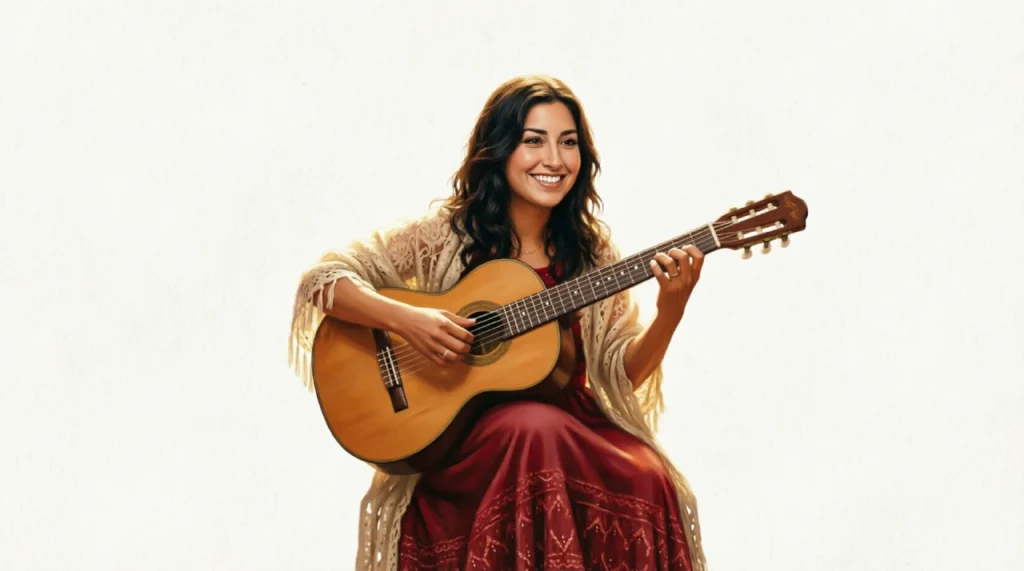
What Kind of Music Does Maura Mendoza Garcia Make?
Maura’s music draws from Latin folk traditions and blends them with contemporary sounds to create something that feels both rooted and relevant. Specifically, her work often features:
- Traditional instruments — connecting listeners to their cultural heritage
- Bilingual lyrics — reaching both English and Spanish-speaking audiences
- Story-driven songwriting — each song carries a clear message or memory
- Community themes — immigration, family, identity, and strength run throughout her work
This is not background music — it is intentional storytelling, much like artists who built careers outside mainstream formulas and found lasting audiences through authenticity.
Performances and Artistic Reach
Maura performs at cultural festivals, community events, schools, and arts organizations. People who attend her shows describe her stage presence as intimate and powerful — the kind of performer who draws the audience in rather than pushing a spectacle outward.
Furthermore, her performances often double as cultural education moments. She builds space for conversation, storytelling, and community connection directly into the show format. As a result, that approach sets her apart from artists who simply show up, perform, and leave.
Community Impact: More Than Just Music
Cultural Advocacy and Representation
One of the most important parts of Maura Mendoza Garcia’s work is her role as a cultural advocate. In communities where Latino voices remain underrepresented in arts institutions, media, and public programs, advocates like Maura fill a critical gap.
She has been involved in:
- Arts education programs — bringing music and cultural expression into schools and community centers
- Cultural preservation efforts — promoting and documenting traditional Latino artistic practices
- Community organizing — using her platform to lift up voices that often go unheard
- Mentorship — supporting younger Latino artists who face the same challenges she once did
This kind of work rarely makes headlines. However, it shapes communities in lasting ways — building cultural confidence in young people and strengthening neighborhoods that often feel overlooked.
Why Community-Centered Artists Matter
Many people measure an artist’s success purely through commercial results — streams, sales, and followers. However, that model completely misses artists like Maura Mendoza Garcia, whose impact works differently.
Her value shows up in classrooms where kids first hear music that sounds like their own family. It lives in community events where elders see their traditions celebrated rather than dismissed. Additionally, it appears in the young Latino artists who saw someone like them on a stage and decided to keep going.
That kind of impact does not show up on a chart. Nevertheless, it is real, and it lasts.
Challenges Faced by Community Artists
Being a community-centered artist is not a simple career path. Therefore, Maura’s journey — like that of many artists in this space — has involved navigating real challenges.
Financial Instability
Community arts work rarely gets enough funding. Grants run out. Programs get cut. Performances get cancelled. As a result, artists like Maura piece together income from teaching, performing, grant writing, and community contracts — none of which offer consistent pay.
Visibility Without Mainstream Support
Mainstream media rarely spotlights community artists. Without label backing or viral moments, building an audience requires ground-level effort — social media, word of mouth, and community networks doing the work that big publicists do for larger names.
Emotional Weight of the Work
When artists root their music in community pain — immigration trauma, cultural erasure, social inequality — the emotional load becomes significant. Moreover, community artists often carry the weight of the stories they tell and the spaces they hold.
Despite these challenges, artists like Maura Mendoza Garcia continue showing up. That persistence, in itself, is a form of impact.
Legacy and Long-Term Influence
The true measure of Maura Mendoza Garcia’s career will not come from album sales. Instead, people will count it in:
- The young Latino artists she mentored into confidence
- The community programs that continued because of her advocacy
- The songs that helped someone feel less alone
- The cultural spaces she helped protect and grow
Legacy in community arts builds slowly and runs deeply personal. It lives in people, not platforms. By that measure, therefore, Maura’s contribution is already significant — and still growing.
Her work reminds us that art does not have to dominate commercially to matter culturally. In fact, some of the most important voices work closest to the ground.
Conclusion
Maura Mendoza Garcia’s biography is not a story of overnight fame or mainstream stardom. Instead, it is something more lasting — a story of commitment to culture, community, and artistic truth.
Through her music, she gave voice to experiences that often go unheard. Through her advocacy, she helped build spaces where Latino identity is not just tolerated but genuinely celebrated. Furthermore, through her mentorship and education work, she made sure her impact will outlast any single performance or project.
For anyone who believes that art should serve people — not just entertain them — Maura Mendoza Garcia’s career proves that it can. Her journey shows that building something meaningful takes time, consistency, and the courage to keep creating even when the spotlight is somewhere else.
If her story resonates with you, consider supporting the community artists working in your own area. Attend a local cultural event. Back a grassroots arts program. And remember — the artists doing the most important work are not always the ones with the most followers.